Tidal Tangle
📋 Game Description
Okay, so you know how sometimes you stumble upon a game, maybe through a random recommendation or just scrolling through a store, and it just… *clicks*? Like, instantly, you know this is something special, something that’s going to steal hours of your life in the best possible way? That’s exactly what happened to me with Tidal Tangle, and honestly, I’m still buzzing from it. I mean, I’ve played a lot of puzzle games in my time, a *lot*, but there’s just something about this one that grabs you and refuses to let go.
I remember the first time I saw it, the screenshots looked deceptively simple. A little boat, perched precariously on a stack of blocks, and the goal? Get it safely to the ground. My initial thought was, "Okay, sure, another physics puzzler, I've seen these before." But man, was I wrong. This isn’t just *another* physics puzzler; it’s an elegant, infuriatingly brilliant masterclass in tension and spatial reasoning. What I love about games like this is how they take a super straightforward concept and then just layer on complexity in such a natural, intuitive way that you don’t even realize how deep you’re getting until you’re completely lost in it.
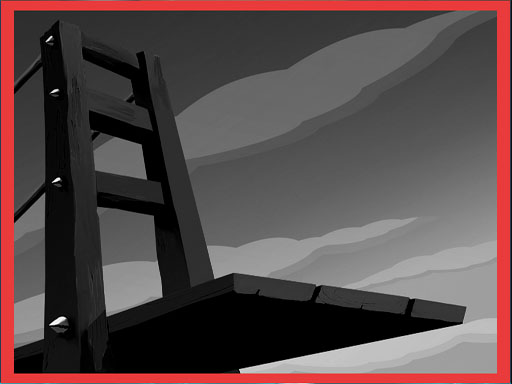
The premise, right, it’s simple: you have this adorable little boat, and it’s sitting up high, usually on a tower of various blocks – wood, stone, maybe some ice blocks later on, you get the picture. Your job is to remove these blocks, one by one, to guide the boat down. But here’s the kicker, the absolute genius of it: you can’t just go willy-nilly. This isn’t about demolishing the tower; it’s about *deconstructing* it with surgical precision. If that boat tips, even a little, if it loses its balance and tumbles off the side, it’s game over. Instantly. And let me tell you, that little "game over" screen, seeing your carefully balanced boat just flop over, it stings. It makes you lean forward, clench your jaw, and immediately hit retry, because you *know* you almost had it.
There’s something magical about that initial moment in each level. You’re presented with this new configuration, this fresh challenge, and you just stare at it. You’re not even touching the controls yet. You’re analyzing. You’re looking at the weight distribution, the potential pivot points, the sequence of removals. Is that block holding up two others? If I pull this one, will the whole thing shift left? What if I try that one first, then this? It’s like a silent conversation with the game designer, trying to decipher their clever trap. You can almost feel the weight of the boat, the delicate balance of the blocks beneath it, just by looking. That’s the visceral connection I’m talking about – it’s not just pixels on a screen; it’s a tangible structure you’re trying to manipulate.
The brilliant thing about this is how it evolves. In the early levels, it’s almost a tutorial, gently teaching you the ropes. You pull a block, the boat settles, maybe shifts a little, and you feel like a genius. "Yeah, I got this," you think. Then, just wait until you encounter the levels where the boat isn't perfectly centered, or where the blocks are arranged in an asymmetrical nightmare, or where there are gaps you have to bridge. The game doesn’t just throw new block types at you; it throws *situations*. Maybe there’s a block that’s glued to another, or one that’s incredibly heavy, or a super slick ice block that makes everything slide with terrifying ease. Each new element isn’t just a gimmick; it fundamentally changes the strategy. It’s not about timing in the sense of quick reflexes, though a steady hand helps, but more about the *timing* of your decisions – when to commit, when to hold back, when to take a calculated risk.
In my experience, the best moments come when you’ve been stuck on a level for what feels like an eternity, trying permutation after permutation, watching that boat topple over and over again. You’re frustrated, you’re muttering to yourself, maybe even considering rage-quitting for a second. But then, you take a deep breath, clear your mind, and look at it again with fresh eyes. And suddenly, it clicks. You see the hidden sequence, the one block that’s the keystone, the delicate dance of removals that will bring the boat down smoothly. That moment of realization, that "aha!" feeling, it’s pure gold. It’s that surge of satisfaction that makes all the previous failures melt away. You execute the plan, carefully tapping each block, holding your breath as the boat wobbles, then settles, wobbles again, and finally, *finally*, lands gently on the ground. The little animation of the boat resting peacefully, the soft chime of victory – it’s just incredibly rewarding.
What’s fascinating is how the game encourages you to slow down. So many games today are about speed, about reaction time, about constant input. Tidal Tangle is the opposite. It’s about observation, patience, and deliberate action. You’ll find yourself just watching the boat, watching the stack, imagining the physics of it all before you even make a move. Sometimes, the solution isn’t about removing a block, but about *which* block to remove to create a stable, temporary platform for the boat to shift onto. It’s like playing a three-dimensional chess game where every piece has weight and momentum.
I’ve always been drawn to games that make you feel smart, that challenge your brain in a way that feels productive and satisfying. And Tidal Tangle absolutely delivers on that. It’s not about memorizing patterns; it’s about understanding principles. It teaches you to think differently, to visualize consequences, to appreciate the delicate balance of things. And honestly, it’s just incredibly charming. The visual style is clean and inviting, the sound effects are subtle but effective, adding to the tension without being distracting. You can almost hear the soft creak of wood, the gentle clink of stone, as you carefully manipulate the structure.
This makes me wonder about the developers, you know? How they managed to distill such a complex physical interaction into something so playable and addictive. It’s a testament to really thoughtful game design, where every element feels intentional, every challenge feels fair but demanding. It’s not about cheap tricks; it’s about genuine problem-solving. And that’s what keeps you coming back, level after level, long after you told yourself you’d just play "one more." You lose track of time, completely absorbed in the delicate dance of blocks and boat, your mind fully engaged in the puzzle at hand.
So yeah, if you’re looking for something that’s going to scratch that puzzle itch, something that’s deceptively simple yet profoundly challenging, something that will make you feel like a genius when you finally crack a tough level, you absolutely have to check out Tidal Tangle. It’s not just a game; it’s an experience. It’s that rare gem that reminds you why you fell in love with gaming in the first place – for those moments of pure, unadulterated satisfaction when a strategy finally clicks into place, and your little boat makes its perfect, triumphant landing. Trust me on this one. You won't regret it.
🎯 How to Play
Desktop Mouse Click and drag Remove a Block Mobile Tap and drag Remove a Block